
Recent Questions

درباره سایت
آخرین مطالب
- Fiverizer: convert a website from XHTML 1.0 to HTML5
- How to Convert Your Website from XHTML 1.0 to HTML5 the Quick and Easy Way
- DC Blog RSS Feed
- [Updated] Free Mobile-Friendly Layout Wizard
- [Fixed] Feedback Form Wizard
- GitHub patch release previous version
- 15 years of blogging 500 posts later
- How to disable Laravel console commands
- Vue show and hide form elements
- Extracting a time into select menus with PHP
امکانات وب
Ensure that the COM port isn't disabled in the BIOS of your PC. You may also need to configure the COM with terminal emulation software with appropriate settings which the coected devices both use for the communication e.g. speed, parity, data, and so on.
The Microsoft MS-DOS and Windows environments refer to serial ports as COM ports: COM1, COM2,..etc. Ports numbered greater than COM9 should be referred to using the .COM10 syntax.[12]
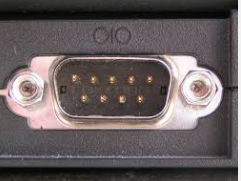
Additionally, you may want to look over COM (hardware interface) for another basic starting point.
I/O addresses
The COM ports are interfaced by an integrated circuit such as 16550 UART. This IC has seven inteal 8-bit registers which hold information and configuration data about which data is to be sent or was received, the baud rate, interrupt configuration and more. In the case of COM1, these registers can be accessed by writing to or reading from the I/O addresses 0x3F8 to 0x3FF.
If the CPU, for example, wants to send information out on COM1, it writes to I/O port 0x3F8, as this I/O port is "coected" to the UART IC register which holds the information that is to be sent out.
The COM ports in PC-compatible are typically defined as:
- COM1: I/O port 0x3F8, IRQ 4
- COM2: I/O port 0x2F8, IRQ 3
- COM3: I/O port 0x3E8, IRQ 4
- COM4: I/O port 0x2E8, IRQ 3
برچسب:
نویسنده: استخدام کار